Over the years, I’ve been asked by mentees, colleagues, and students how to become a better environment artist—not in terms of learning new software or mastering a specific pipeline, but in the broader sense of creative decision-making. Since this is a more nuanced and personal process, I thought summarizing my thoughts in a blog post would be the most helpful approach.
Unlike my previous post on material artistry, where I could simply link tutorials and send people on their way, improving your artistic eye is a journey that varies greatly from person to person. There’s no shortcut—just years of practice and deliberate effort. What I’m sharing here is what I did over five or six years to sharpen my artistic judgment. If you're looking for quick-fix advice, this isn't it. But if you’re willing to put in the reps, I hope you find something valuable in this post.
The thing is it's not necessarily about creating total realism.You're not always trying to completely represent reality, for me anyway. I want to create a reality. I want to put the audience in a world that they believe. That appears like it behaves the way the real world does to their eyes. The light behaves the way it does in the real world. I like to create a world that the audience can be immersed in and can believe in.
It's not necessarily the world that I see out here now. That's especially, I think, applies to night shooting. It's very hard to recreate exactly what night looks like because your eyes behave so differently in low light levels and especially reflective sunlight, i.e. moonlight which
is reflected sunlight. The moon does not glow by itself. The color spectrum is always pushed off to this green-blue, but that's not really what's there. That's what your eyes are interpreting. I think it's a mistake, in that sense, to try and create something that's ultra-realistic. I think you create your own version of it. Really, how you interpret it. I don’t really like a frame where everything is kind of so dark. It might be realistic and naturalistic because it's muddy and dark, and that's what you would see if you’re out there on a really black night with no moon and a cloudy night, sure. But do you want to show the audience that? I don’t. So it's your interpretation of it that is important.
This quote from Roger Deakins perfectly sums up my attitude toward art and aesthetics. The more I listened to him, the more I realized how much I aligned with his perspective. As environment artists, one of the biggest mistakes we make in production is forgetting that we’re creating a game, not a portfolio piece. Roger’s insights in the video below articulate this beautifully. His approach not only helped me grow as an artist but also as a game developer—which is ironic, considering he comes from the film industry as a director of photography.
When I was coming up, I found myself gravitating more toward Gnomon talks. Unlike some GDC talks, which often focus heavily on pipeline techniques, these discussions emphasized aesthetic choices and the bigger picture—something I found far more valuable. There are already countless resources available for learning pipelines, and at the end of the day, they’re just tools for executing an idea. What I appreciated about these talks was how they helped me think critically about which ideas were worth pursuing in the first place.
It also doesn’t hurt that these talks feature some of the most visually stunning games of the past decade.
I find it amusing how often environment artists either lack or even resent design sense. Our job isn’t just to create a pretty picture—it’s to guide the player, tell a story, and ensure the game is fun. A huge part of what we do revolves around leading the player, and that process becomes much smoother if we take the time to understand what design is trying to achieve.
From a creative standpoint, learning about visual hierarchy, avoiding tangents, and understanding the pacing of a mission or level can accelerate our growth significantly. Pacing, in particular, is just as much an environment art challenge as it is a design or gameplay issue. Recognizing this at a higher level makes our jobs much easier and leads to stronger, more cohesive experiences for the player.
Videos on video game cinematography helped me understand the high bar that’s set and just how much thought goes into every decision. Early on, it’s easy to fall into the trap of thinking, “This looks cool,” and stopping there. But these videos opened my eyes to the many layers behind every artistic choice.
Of course, it’s unrealistic to apply this level of depth to entire levels all the time—we have video game-specific challenges to tackle. But as the old saying goes, “Aim for the stars, land on the moon.” Striving to put this much thought into our decisions, even if we don’t reach perfection, will only elevate our work.
It’s easy to get caught up in tech, pipelines, software, and complex workflows. I remember stumbling across Ian Hubert while learning Blender and feeling like a weight had been lifted off my shoulders. He was creating insanely good art in a short amount of time. Granted, it wasn’t video game art, but it gave me that “if it works, it isn’t hacky” mindset—something that really stuck with me.
An old Art Director once told me, “Art is never finished.” There’s always room to push quality further, add more detail, or refine the nuances. But one of the most valuable skills to develop is knowing when something is good enough for a scene or area.
That balance is tricky—lean too far one way, and the work lacks refinement; too far the other, and you risk endlessly polishing without real progress. Learning where to draw that line takes a lot of experience and is one of the hardest skills to develop.
This might seem obvious, but I think a lot of people don’t spend enough time really studying great art and reverse-engineering how it was made. What’s funny is that this often doesn’t require much effort—many artists generously share breakdowns and assets at different stages of the pipeline, giving us valuable insight into their process.
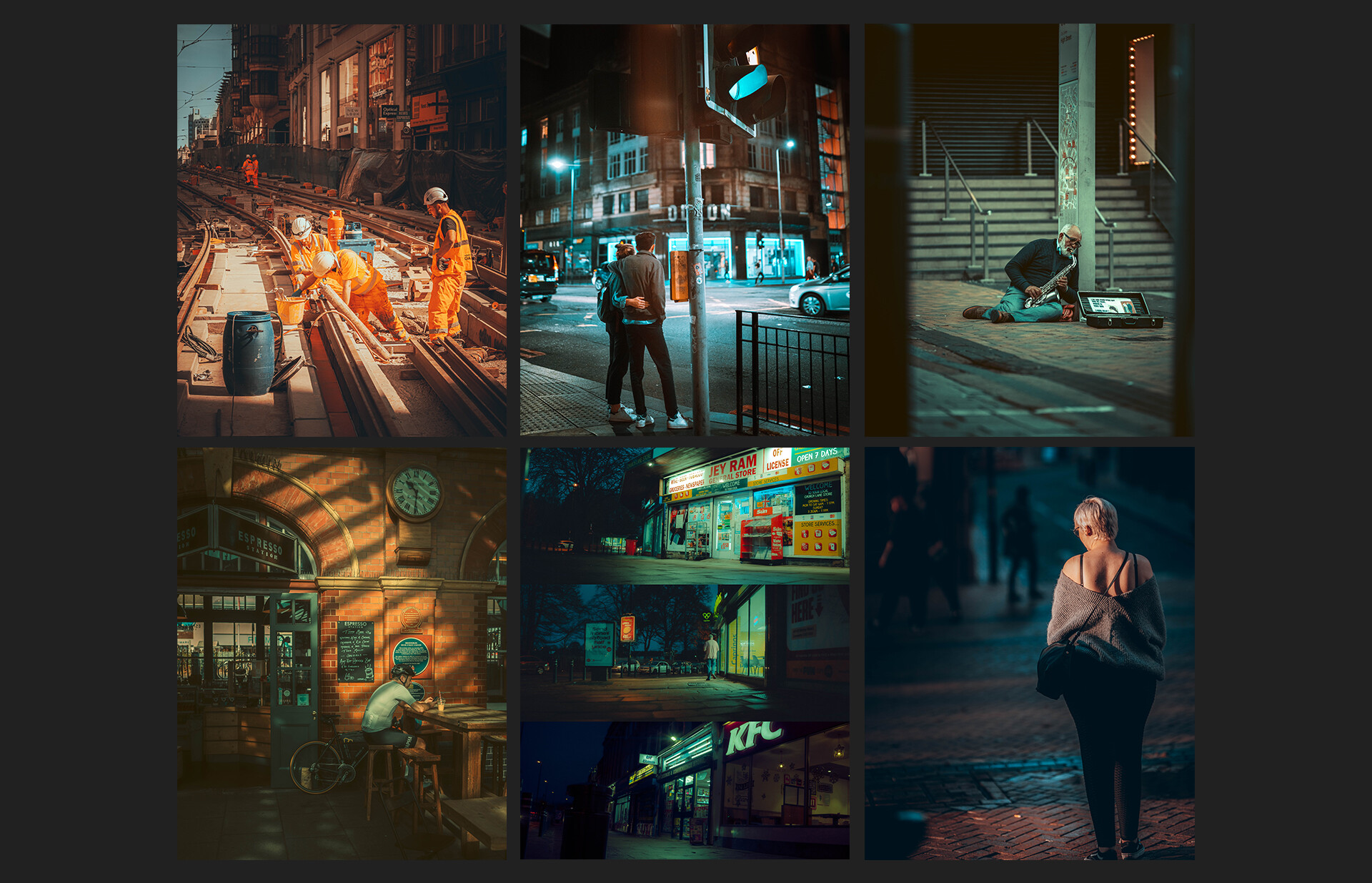
For a while, I tried something on Instagram: instead of simply sharing photos I liked from other photographers, I made a point to articulate why I liked them. This quickly pushed me beyond the surface-level, “social media” aesthetic of cool colors and dramatic lens flares. Taking the time to analyze what specifically drew me to certain images—not just that they looked good—helped me develop a much deeper understanding of visual storytelling and composition.
As I started to allude to above, art and aesthetics go far beyond just game art. Early in my career, I felt stagnant because all I ever looked at was game art. But once I started exploring other mediums, I saw real growth as an artist.
Photography was a huge influence for me—not just in terms of composition or capturing a beautiful image, but in understanding the aesthetic choices behind it. Things like focal length and how it affects the feel of an image, the unique quirks and imperfections of different lenses, using aperture effectively, exposure, and color grading. While these aren’t tools we use daily as environment artists, they deepen our understanding of imagery and give us a better vocabulary for discussing aesthetics.
A great resource I use all the time is ShotDeck—an incredible tool for studying movie cinematography. Breaking down a still image, analyzing subtle choices in focus, leading the eye, and storytelling within a frame is invaluable. Interestingly, we do the exact same thing in games. The player character and enemies are our focal points, and films can teach us powerful techniques for establishing an area, staging action, and creating intense emotional moments. These skills translate almost one-to-one for environment artists—especially when we remember that our job isn’t just to make a pretty image, but to craft a compelling experience in collaboration with our design peers.
This might be a bit indulgent, but I think this video does an amazing job of showing just how deep you can go when analyzing composition. What’s interesting is that I actually apply these principles in my day-to-day work. When laying out a space, composition can be used to support the flow and storytelling of a level. Maybe not to the same meticulous degree as Drive, but the lessons are still there to be learned.
Another thing I started exploring was the ability to get my ideas down quickly—creating shapes and working with values to build compositions in 2D. I’m not planning on quitting my day job anytime soon, but practicing this skill has been incredibly valuable. It’s another way to improve our artistic eye and, in turn, helps us better understand and assess an image in our day-to-day work. Being able to quickly pinpoint what’s wrong with a composition is a skill that carries over directly into our work as environment artists.
What we’re talking about here is the ability to articulate yourself and break down an image. As we mentioned earlier with professional work, participating in Discord servers and critiquing others' art is an invaluable resource. Your artistic eye is like muscle memory—it gets stronger through repetition. Learning how to communicate your ideas effectively and understanding what’s wrong with an image are two of the most important things you can do to level up as an artist.
One thing that really helped me was surrounding myself with creative ideas. I spent a lot of time in Discords with other artists, and when I wasn’t doing that, I listened to a variety of creative podcasts—not just about game art, but also topics like movie-making, photography, music, writing, world-building—anything, really. It exposed me to different ideas and ways of thinking. Sometimes, all it takes is a new perspective from one random podcast to click an idea into place. Below, I’ve listed some podcasts I hosted, along with other types of podcast content that really helped me. While not all of them are directly related to creating game art, as I mentioned before, it’s about broadening your perspective.
GDD
Team Deakins
Collective Podcast
Walkie Talkie
Local Script man
I want to close with a cautionary note: It’s easy to burn yourself out when you pile on too much pressure. Trying to tackle all of these aspects at once, especially while also working on developing the hard skills required as an environment artist, can be overwhelming. As I mentioned at the start, the key is to put in the reps and build muscle memory over time. None of this advice is meant to be tackled all at once—rather, it’s a collection of things I’ve done over the past five or six years to improve as an artist. Take it one step at a time, and don’t feel like you need to do everything right away.
I hope some of these ideas are helpful. If you’re feeling stuck in a rut, perhaps one of these approaches will help you get back on track and continue progressing in your journey.